
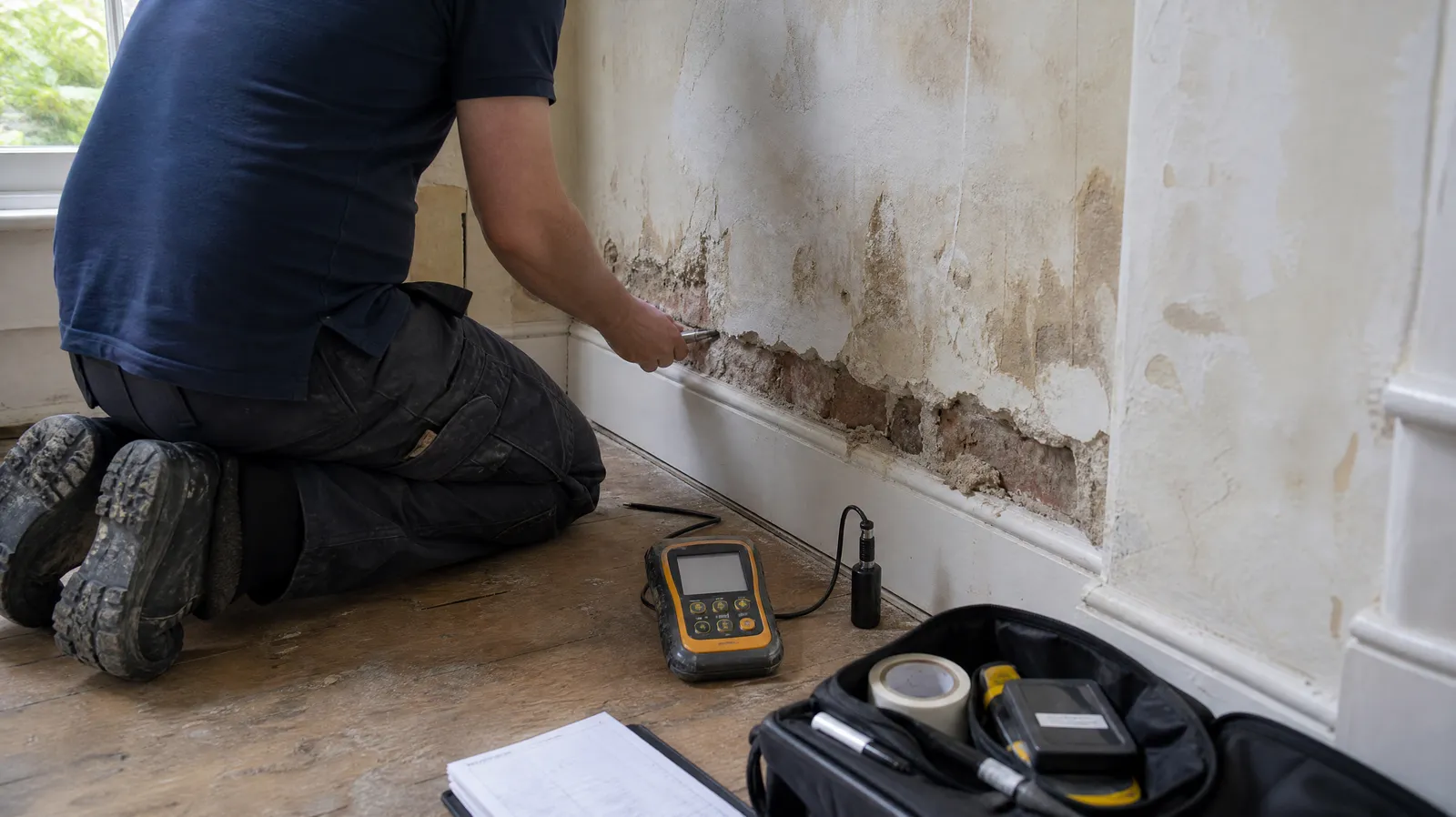
Is Rising Damp a Myth? What a Good Damp Survey Should Tell You
Is rising damp a myth? Learn how to spot genuine rising damp, what misdiagnosis looks like and what a good Damp Survey in Birmingham should tell you.
Rising damp is not a myth, but it is far rarer than many damp firms claim. At Eco Damp Proofers in Erdington, we see plenty of homes where “rising damp” was diagnosed and the real culprit was a blocked gutter, a leaking pipe or condensation. This guide explains how to tell the difference, so you can judge whether a survey, and the quote that follows it, is honest. Questions? Call us on 0121 330 2385, open 7 days a week, 9am-7pm.
Why people think rising damp is a myth
The doubt is fair. The English Housing Survey 2024 to 2025 (MHCLG) found serious condensation was the most common form of damp in English homes at 3%, ahead of penetrating damp at 2% and rising damp at 1%. Rising damp does exist, but it is the least common of the three.
The trouble starts when a damp patch is blamed on rising damp by default. Tidemarks, peeling paint and salty deposits can all come from other causes. A surveyor who reaches for injection before looking at the building is skipping the important part.
What rising damp actually is
Rising damp is groundwater travelling up through brick or stone by capillary action, much like a tea bag drawing up a drop of tea. It happens when a wall has no working damp-proof course (DPC), or when the DPC has failed or been bridged.
It usually shows up as:
- A fairly even tidemark, typically no higher than about a metre above the floor
- Crumbling plaster and white salt deposits at skirting level
- Damp that stays put through dry weather and dry spells, rather than appearing after rain
Birmingham’s Victorian and Edwardian terraces in Erdington, Handsworth and Moseley are the usual suspects, as are older homes where a DPC has been breached. Interwar semis and post-war flats can have it too, but less often.
How we decide it’s really rising damp
We work from the outside in, and we rule out the cheaper explanations first:
- Gutters and downpipes. With about 133 wet days a year in Birmingham (Met Office, 1991-2020 averages), a leaking joint can soak a wall for months.
- Pointing and brickwork. Cracked or eroded mortar lets rain in sideways, which is penetrating damp.
- Ground levels. Patios, paths or soil piled above the DPC let water bypass it.
- Ventilation and condensation. Mould on cold walls, behind wardrobes or around windows usually points to moisture in the air, not the ground.
- Moisture readings. Meter readings alone mislead, because salts and plaster can give false highs. We use them alongside what we can see, and a sample from the wall where needed.
Only when those are ruled out do we talk about a new DPC. If you don’t need us, we’ll say so.
What a good survey should tell you
A proper damp survey should give you a written report that names the cause, shows the evidence, and lists treatments in order of cost, including cheaper options where they exist. It should not be a sales visit that ends in one price for injection.
For context on cost, Checkatrade’s 2026 guide puts chemical or injection damp proofing at typically £1,000-£3,000, and a damp survey at £100-£600. Its 2023 survey guide gives about £400 for a 3-bed terraced house. In Hall Green, Birmingham, Checkatrade’s 2026 figures put average damp proofing at £1,104. Costs vary with the type and severity of the damp, the method, the area affected and access.
If you’ve already had a quote that doesn’t feel right, a second opinion costs far less than the wrong treatment. We provide a written quote before any work starts, whether you’re in Erdington, Sutton Coldfield, Solihull or Walsall.
Key takeaways
- Rising damp is real but uncommon; condensation and penetrating damp are more frequent (English Housing Survey 2024 to 2025, MHCLG).
- Gutters, pointing, ground levels and ventilation should be checked before any injection is suggested.
- A good report names the cause, shows evidence and offers cheaper options where they exist.
- Get a second opinion if a quote jumps straight to injection.
Call for a damp survey
If you suspect a misdiagnosis or want a straight answer on your walls, call us on 0121 330 2385 for a damp survey. We cover Birmingham and the West Midlands and are open 7 days, 9am-7pm.
Frequently Asked Questions
No, but misdiagnosis is common. Genuine rising damp exists, particularly in older homes with failed or missing damp-proof courses. The problem arises when it is diagnosed from a meter reading alone. Ask for the evidence, and for other causes to be ruled out in writing.
Yes, if it finds the real cause. Ours is free and there's no obligation. We can usually visit within 3 working days, check outside as well as in, and explain the cause in plain English. If the fix is a gutter or better ventilation, we say so before quoting for anything bigger.
Often partly, yes. Plaster that has soaked up groundwater salts usually needs replacing to a height above the tidemark, because salts keep drawing in moisture. If the cause was a gutter or pointing, the wall may only need to dry out and be redecorated.
Damp, mould or a musty smell? Let's find the cause.
Call us 7 days a week, 9am–7pm. We can usually do a free survey within 3 working days, find what's really causing it, and give you a written quote before any work starts.