
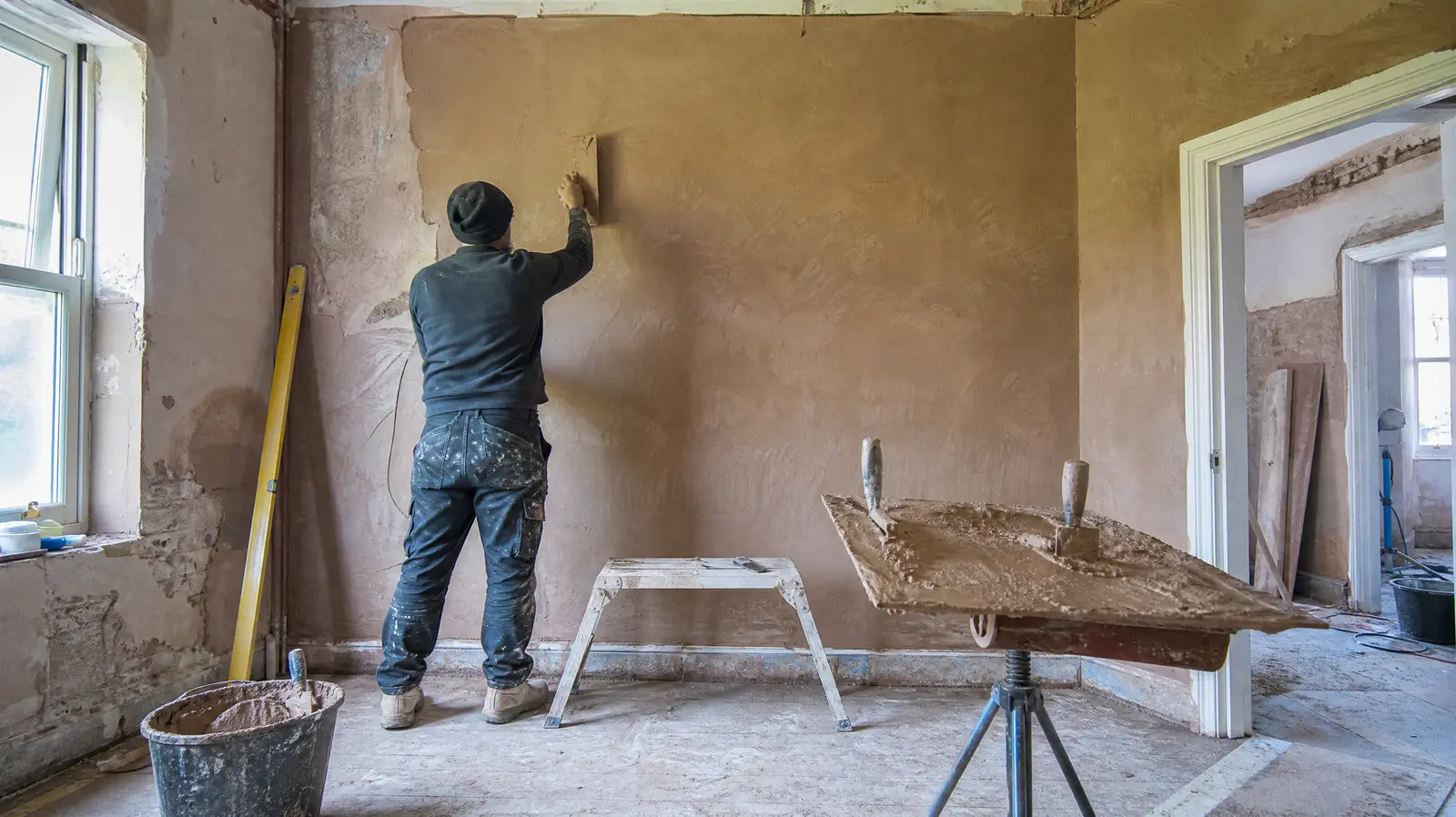
Replastering After Damp Proofing in Birmingham (Dry Walls Ready for Paint)
Replastering After Damp Treatment in Birmingham: salt-resistant plaster for dry, paint-ready walls and a healthier home. Written quote before any work.
Call for a damp survey: 0121 330 2385 Open 7 days a week, 9am-7pm. We find the cause of your damp before recommending any treatment. Covering Birmingham and the West Midlands.
Once a damp problem is fixed, the walls still need to be put right. Eco Damp Proofers is a local team that starts with the cause, whether that’s a leaking gutter, failed pointing, high ground levels or poor ventilation, and only then looks at the plaster. Replastering after damp proofing means removing plaster that has absorbed moisture and salts, then putting back a finish that can cope with whatever the brickwork still releases. It matters across Birmingham’s Victorian and Edwardian terraces, interwar semis and post-war flats, where old plaster is often the last visible sign of a problem that has already been solved.
What Happens to Your Walls
Damp plaster rarely dries out and behaves again. The wall is stripped back to bare masonry, checked, allowed to dry, and re-covered with a plaster system chosen for the conditions in that wall. The stripped area is usually larger than the visible stain, because salts and moisture travel further than the mark you can see. We tell you plainly where the line falls and why.
Why Salt-Damaged Plaster Has to Come Off
Damp plaster has to be removed because the salts it contains keep pulling moisture out of the air long after the source of the water is fixed. Leaving it in place usually means bubbling paint, powdery white deposits and patches that stay cold and clammy.
Groundwater and leaking water carry mineral salts from the brickwork into the plaster. As the water evaporates, the salts are left behind. They are hygroscopic, which means they absorb moisture from the atmosphere, so a wall can feel damp again on a humid day even though nothing is leaking.
Painting over this, or using a “damp-proof” paint, rarely lasts. The salts push through the coating and the wall blows again. Stripping back is the only dependable way to clear them out.
This is for anyone who has had a gutter, pointing or ground-level problem corrected, or a damp-proof course installed to BS 6576:2005, and still has stained or crumbling walls. The benefit is a surface that stays sound rather than one you redecorate every year.
Salt-Resistant and Breathable Plasters
Salt-resistant plaster is made to tolerate residual salts and moisture in the wall without breaking down. Combined with a breathable finish, it lets the masonry release what it still holds instead of trapping it behind a hard, sealed surface.
Renovating plaster is typically applied in a system: a sticky base coat bonded to the brick, then a lime- or specialist-based coat that carries its own pores. Those pores give salts somewhere to collect inside the plaster, away from the surface you paint.
Ordinary gypsum plaster and cement-rich mixes are poor choices for older solid walls. They are hard and sealed, and they hold moisture against the brick. That is why a patched wall in a Birmingham terrace so often fails again within a few seasons.
This suits solid-brick homes in Erdington, Handsworth, Moseley and similar areas, and any wall that has had a proper cause-first repair. The homeowner benefit is a finish that lasts, plus a wall that can still breathe in a city with about 133 wet days a year (Met Office, 1991-2020).
Drying Times Before You Decorate
Drying time depends on how wet the wall was, how thick the new plaster is, and how well the room is ventilated. Rushing it is the most common reason fresh plaster fails, so we don’t give a single fixed figure. We advise you when you can decorate and put it in your written quote.
Once the work is done, the plaster and the wall behind it both need to dry. The wall can hold water for a long time after the source has been fixed, particularly thick Victorian brickwork. Painting too early traps moisture and brings back staining.
For the first stage, we recommend a breathable mineral paint or a thin coat of emulsion thinned according to the plaster manufacturer’s guidance, never vinyl or sealing paints. Keep the room ventilated, and follow the requirements of Building Regulations Approved Document F, which sets out ventilation expectations for homes.
This stage matters most for owners who are selling, refinancing or letting. The benefit is a finish that stays clean, so you only paint once.
Who Needs This
- Homeowners in older Birmingham properties where a gutter, pointing or ground-level fix has been made but the wall still looks tired. Damp affects 4% of owner-occupied homes in England (English Housing Survey 2024 to 2025, MHCLG).
- Private landlords, where damp affected 10% of privately rented homes (English Housing Survey 2024 to 2025, MHCLG). The Housing Health and Safety Rating System (HHSRS) treats damp and mould as a hazard, so finished repairs matter.
- Social landlords, who since 27 October 2025 must investigate significant damp and mould hazards within 10 working days, send a written summary within 3 working days of the investigation, and complete safety works within 5 working days. Emergency hazards must be dealt with within 24 hours (GOV.UK Awaab’s Law guidance, MHCLG, 2025).
- Buyers whose survey has flagged damp and who want to know what the walls really need.
Is It Really Rising Damp?
Many people have read that rising damp is over-diagnosed, and they are right to be cautious. Serious condensation was the most common form of damp in English homes in 2024 at 3%, ahead of penetrating damp at 2% and rising damp at 1% (English Housing Survey 2024 to 2025, MHCLG).
So we check the simple things first: gutters, downpipes, pointing, ground levels outside, ventilation and heating. We look at the pattern of the staining and, where needed, how moisture sits through the wall. Only if those are ruled out do we discuss a damp-proof course, and we say so if you don’t need one. Replastering is then planned around what we find, not the other way round.
From Survey to Finished Wall
- Survey and diagnosis. We look at the walls, outside and in, and explain the cause in plain English.
- Fix the source. Gutters, pointing, ground levels or ventilation come first, with any damp-proof course only where it’s justified.
- Strip back. Affected plaster is removed to bare brick, with dust sheets and tidy-up as part of the job.
- Re-plaster. A salt-resistant, breathable system is applied in coats.
- Drying and decorating advice. We tell you when it’s ready for paint and which finishes to use.
What You Gain
You get walls that stay dry, look clean and hold paint, without the cycle of patching and repainting. A properly finished repair also gives buyers, mortgage lenders and tenants something visible and reassuring, and a breathable system sits well with older brickwork instead of working against it.
Investment Guide
Replastering is priced on the area affected, wall thickness, access, how much has to be stripped back and the plaster system chosen. We don’t publish a per-square-metre figure because walls vary too much. You get a written quote before any work starts, including cheaper options where they exist.
For context, here is what the wider damp proofing market charges:
- Chemical or injection damp-proofing typically costs £1,000-£3,000 (Checkatrade damp proofing cost guide, 2026).
- Damp proofing a typical property costs around £5,000, plus around £300 for a damp survey (Checkatrade damp proofing cost guide, 2026).
- Damp proofing in the UK averages £1,220, with typical jobs from £772 to £1,942 (Checkatrade, 2026).
- In Hall Green, Birmingham, the average is £1,104 (Checkatrade, 2026).
Price depends on the type and severity of the damp, the treatment method, the size of the area, access and location (Checkatrade, 2026). Replastering may be an added cost on top of these, so we spell it out.
Questions Homeowners Ask
Do I need to replaster after damp proofing?
Usually yes, where the old plaster is salt-contaminated, crumbling or stained. If the plaster is sound and dry, it can stay. We check before recommending anything, and if a wall only needs a repair or redecoration, we’ll tell you so in the written quote.
How long before I can paint new plaster?
It depends on the wall’s moisture, the plaster thickness and ventilation, so there’s no single number. Paint too early and moisture gets trapped. We tell you when each wall is ready and recommend breathable paint for the first coats.
Can I just use damp-proof paint instead?
Rarely a lasting fix. Salts and moisture push through sealing paints, and the surface blisters again. Paint treats the symptom. If the cause is solved and the plaster is contaminated, stripping and replastering gives a dependable result.
How much does damp proofing cost in Birmingham?
Damp proofing in Hall Green, Birmingham, averages £1,104 (Checkatrade, 2026), and injection work typically costs £1,000-£3,000 (Checkatrade, 2026). Replastering is priced separately by area and access. Call 0121 330 2385 and we’ll give you a written quote before any work.
Who is responsible for damp in a rented home?
Landlords are generally responsible for repairs that cause damp, and the HHSRS treats damp and mould as a hazard. Social landlords in England must meet Awaab’s Law timescales, which began on 27 October 2025 (GOV.UK, MHCLG, 2025). Tenants should report problems in writing.
Talk to a Local Damp Team
If you’re in Erdington, Sutton Coldfield, Moseley, Handsworth, Solihull or Walsall and want the walls put right properly, we’ll tell you what’s needed and what isn’t. Call for a damp survey: 0121 330 2385. We’re open 7 days a week, 9am-7pm.


How It Works
From initial survey to completion — here’s what to expect when you work with us.
-
Call or send a message
Tell us what you can see. We ask a few questions and book a visit at a time that suits you, any day 9am–7pm.
-
We find the cause
We check inside and out: readings across the walls, gutters, pointing, ground levels, ventilation and timbers.
-
Written quote
You get the cause, the fix and the price in writing, including any cheaper options, before any work starts.
-
We do the work
Our own team carries out the treatment, leaves the house tidy and explains how long the walls need to dry.
Related Guides
Helpful articles to learn more about this service.
Damp, mould or a musty smell? Let's find the cause.
Call us 7 days a week, 9am–7pm. We can usually do a free survey within 3 working days, find what's really causing it, and give you a written quote before any work starts.